
Technology
The Technology and Medical Advantage
Proprietary neural networks that find vascular signals in the images clinicians already have.
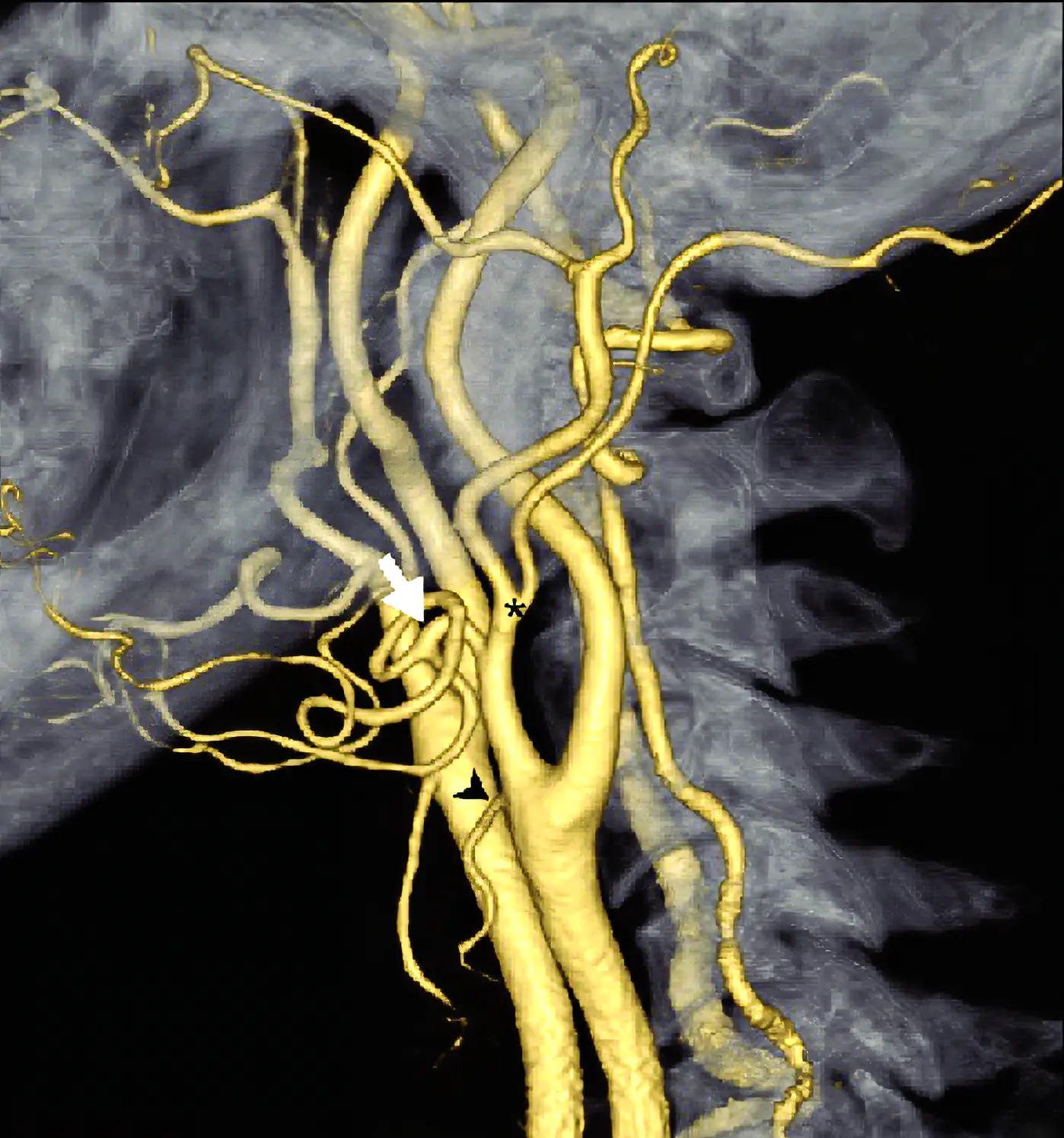
The Optima platform uses proprietary Convolutional Neural Networks (CNNs) to localize vascular silhouettes directly from native, non-contrast images. It is being developed to provide quantitative estimates of stenosis severity. Optima Stroke analyzes panoramic dental X-rays. Optima Arteria is being developed for non-contrast radiographs, the focus of its first clinical study. Extension to other imaging technologies, including MRI, and the related clinical validation are intended for the next stage.
Contrast-free by design. Optima is designed to reveal arterial silhouettes and estimate stenosis severity without contrast agents, even where no plaque calcification is visible. This capability is under development and has not yet been clinically validated.
Built with patient safety in mind. By working without iodinated contrast or high-radiation CT Angiography, Optima aims to offer a safer, lower-cost triage pathway for high-risk patients.
Workflow-native. A standardized, DICOM-native architecture is designed to integrate with existing hospital PACS and EHR systems, moving workflows from reactive to proactive through automated alerts.
Sustainably scalable. Optima is built for rapid global scale: no additional imaging cost, no workflow disruption and minimal marginal cost per patient.
What sets Optima apart
Optima's distinctiveness comes from the combination of several elements
Unique dataset aggregation
Proprietary feature extraction for vascular silhouette detection beyond visible calcification
Data network effects
Clinical validation
Deep integration within hospital workflows
Together, they create a high barrier to entry.